
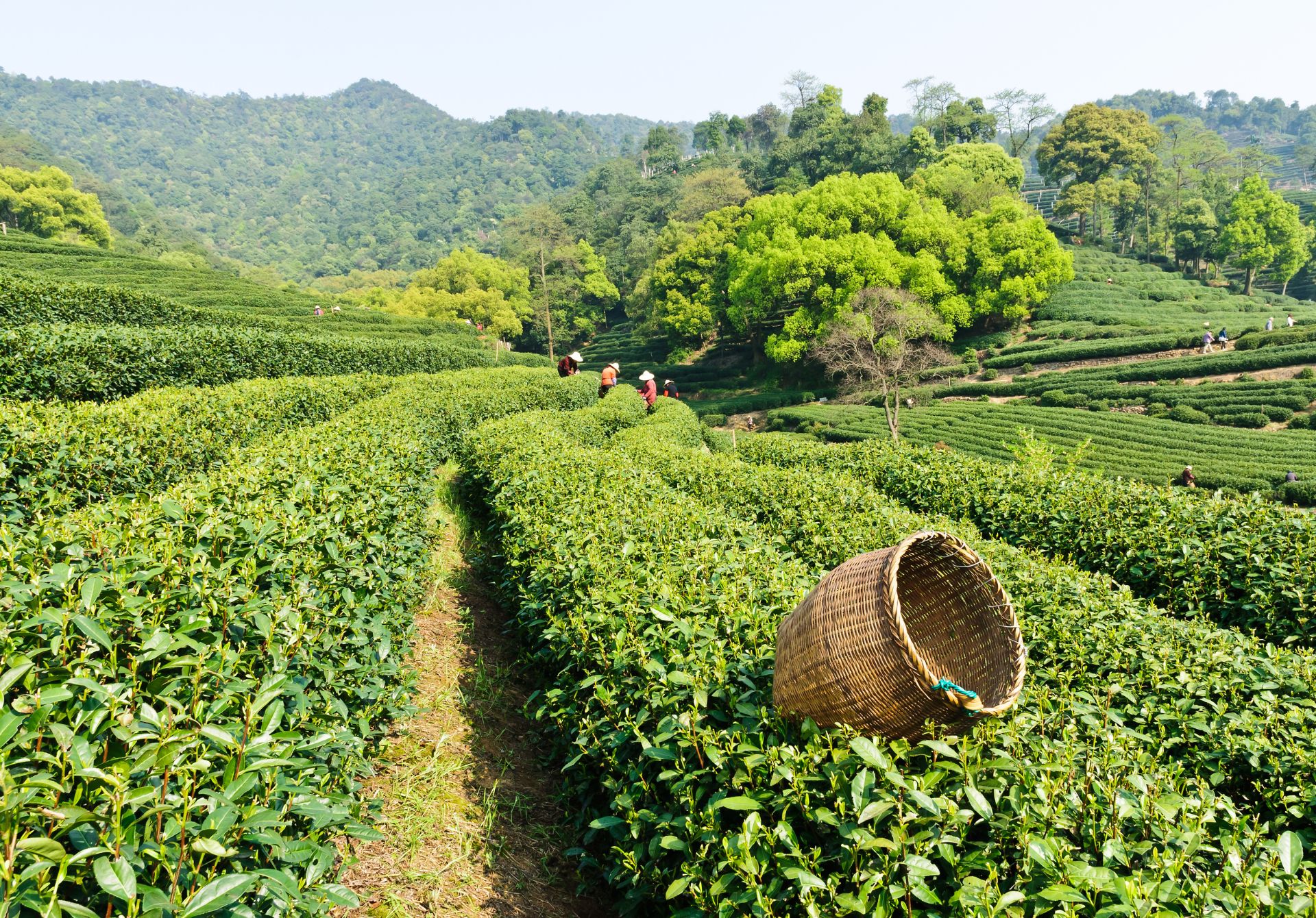
Picture this: rolling emerald hills blanketed with perfectly manicured tea bushes, traditional village houses with curved roofs nestled between the rows, and the sweet fragrance of freshly picked leaves wafting through the mountain air. Welcome to the Longjing Tea Plantations of Hangzhou—where China’s most celebrated green tea has been cultivated for over 1,200 years, and where you’ll find one of the most enchanting experiences in all of Eastern China.
If you’re planning a trip to Hangzhou and West Lake is on your must-see list (and it absolutely should be), here’s the insider tip: the tea plantations just beyond West Lake’s western shores offer an equally magical experience—minus the overwhelming crowds. Let me walk you through everything you need to know to make the most of this extraordinary destination.
The Legend Behind the Leaves
Longjing tea, also known as Dragon Well tea, isn’t just any green tea—it’s been crowned the “Green Queen” and holds the prestigious title of China’s number one tea. But what makes it so special? The answer lies in a perfect storm of natural conditions: fertile mountain soil, pure spring water, and a climate that seems custom-designed for growing tea.
Here’s a story that’ll make you smile: Legend has it that Emperor Qianlong of the Qing Dynasty visited these plantations in the 18th century and became so fascinated by the harvesting process that he decided to try picking tea himself. When word arrived that his mother had fallen ill back in Beijing, he rushed home—completely forgetting about the tea leaves he’d stuffed into his robe sleeve. Upon arrival, his mother smelled the fragrant leaves, requested they be brewed into tea, and miraculously recovered after drinking it. The emperor promptly declared Longjing tea a cure-all, catapulting its popularity across China and eventually the world.
Two Villages, One Unforgettable Experience
The tea plantation area encompasses several villages, but two stand out for visitors: Meijiawu Village and Longjing Village. Each offers its own unique charm, and if you have the time, experiencing both is absolutely worth it.
Meijiawu Village: The Peaceful Gem
Located about 10 kilometers from downtown Hangzhou, Meijiawu is where you’ll find authenticity without the tourist circus. This 600-year-old village gained fame after former Chinese Premier Zhou Enlai visited five times, putting it on the map for international visitors. Today, more than 160 teahouses dot the village, and nearly every family makes their living from tea production.
What makes Meijiawu special is its laid-back atmosphere. The village feels genuinely lived-in rather than staged for tourists. You’ll see traditional houses with tea leaves drying on patios, local farmers pan-roasting their harvest right outside their front doors, and expansive views of tea terraces climbing up the hillsides like green waves frozen in time.
Longjing Village: The Famous Original
Known as the “Number One Tea Village,” Longjing Village is the birthplace of Dragon Well tea and produces what many consider the finest Longjing leaves available. It’s closer to West Lake and consequently sees more visitors, but there’s good reason for its popularity—this is where tea cultivation traditions run deepest, with families who’ve been growing tea for countless generations.
The village sits beneath protective peaks including Lion Peak and Tianzhu Peak, which shield the tea plants from harsh winds and create ideal growing conditions. Walking through Longjing Village feels like stepping into a living museum of Chinese tea culture.
What to Do: Beyond Just Sipping Tea
Sure, you could just visit for a quick cup of tea, but that would be like going to Paris and only seeing the Eiffel Tower from a taxi window. Here’s how to make the most of your visit:
- Experience the harvest season: Time your visit for late March through early April if possible. This is when the first flush of spring leaves is picked—the most prized harvest of the year. You’ll see the hillsides alive with straw-hatted tea pickers, baskets being carried to and fro, and that magical energy that comes with harvest time. The scenery is absolutely spectacular, some travelers describe it as the most beautiful landscape they’ve ever witnessed.
- Get your hands dirty: Many teahouses and local families offer hands-on experiences where you can pick tea leaves yourself, then watch (or participate in) the pan-roasting process. There’s something deeply satisfying about drinking tea you helped harvest—even if your picking technique leaves much to be desired compared to the lightning-fast experts.
- Hike between villages: The trek from Meijiawu to Longjing Village takes about 2 to 2.5 hours and ranks among the most rewarding hikes you’ll ever do. The trails wind through endless tea terraces, often completely deserted except for the occasional tea picker. Budget about 4-5 hours total if you want to stop for tea, take photos, and really soak in the atmosphere.
- Visit the China National Tea Museum: With two branches in the area, this museum offers free admission and comprehensive exhibits on tea culture, processing techniques, and the 4,700-year history of Chinese tea. The main branch features working tea plantations where you can watch harvesting in action.
- Try Longjing-infused cuisine: Don’t miss signature dishes like Longjing stir-fried prawns, which combines fresh river prawns with crunchy tea leaves. Several restaurants in the area specialize in this local delicacy, with Maocao Wu restaurant being particularly noteworthy for its location right on the plantation edge.
Practical Tips for Your Visit
Getting there is straightforward. From downtown Hangzhou, the plantations are only about 15 kilometers away—roughly 30 minutes by taxi. If you prefer public transportation, tourist buses Y3 and Y4 service Longjing Village and Meijiawu Village respectively, while bus 27 runs from West Lake’s northern shore to the tea area. Bus 87 conveniently connects various sites throughout the plantation region.
While the tea plantations are gorgeous year-round, spring (March-April) offers the most vibrant experience with active harvesting and perfect weather. Just be warned: avoid the Tomb Sweeping Festival holiday in early April unless you enjoy wall-to-wall crowds. The Monday right after the long weekend tends to be much more peaceful.
As for tea purchases, prices vary wildly depending on quality and harvest timing. You might find bags for 30 RMB per 100 grams from local farmers, or pay significantly more for premium pre-Qingming leaves at established shops. The good news? Even the affordable options from local growers can be exceptional—often better than expensive tea bought in city shops. Don’t be shy about tasting before buying.
Why This Should Be on Your Hangzhou Itinerary
Most visitors to Hangzhou focus exclusively on West Lake, and while the lake is undeniably beautiful, you’re missing half the story if you skip the tea plantations. This is where you’ll find the authentic Hangzhou—the one locals actually experience. The plantations offer a respite from tourist crowds, opportunities for genuine cultural immersion, and scenery that looks like it’s been lifted straight from a classical Chinese painting.
The tea plantation area covers 240 hectares across eight villages, providing endless opportunities for exploration. Whether you’re hiking through silent tea terraces, sitting in a family-run teahouse watching leaves steep in glass cups, or simply standing on a hilltop taking in views that seem to stretch forever, you’ll find a sense of peace and timelessness that’s increasingly rare in modern China.
For tea enthusiasts, this is obviously pilgrimage-worthy territory. But even if you couldn’t tell oolong from Earl Grey, the visual beauty, cultural depth, and warm hospitality make the Longjing plantations an essential Hangzhou experience. The villages are easily accessible, genuinely welcoming to foreign visitors, and offer that perfect combination of natural splendor and cultural authenticity that great travel experiences are made of.
So when you’re planning your Hangzhou adventure, allocate at least half a day (ideally a full day) for the tea plantations. Your Instagram feed will thank you, your taste buds will thank you, and most importantly, you’ll come away with memories and photos that capture the essence of traditional Chinese culture in one of its most beautiful settings. Trust me—this is one side trip that delivers experiences far exceeding the modest effort required to get there.