
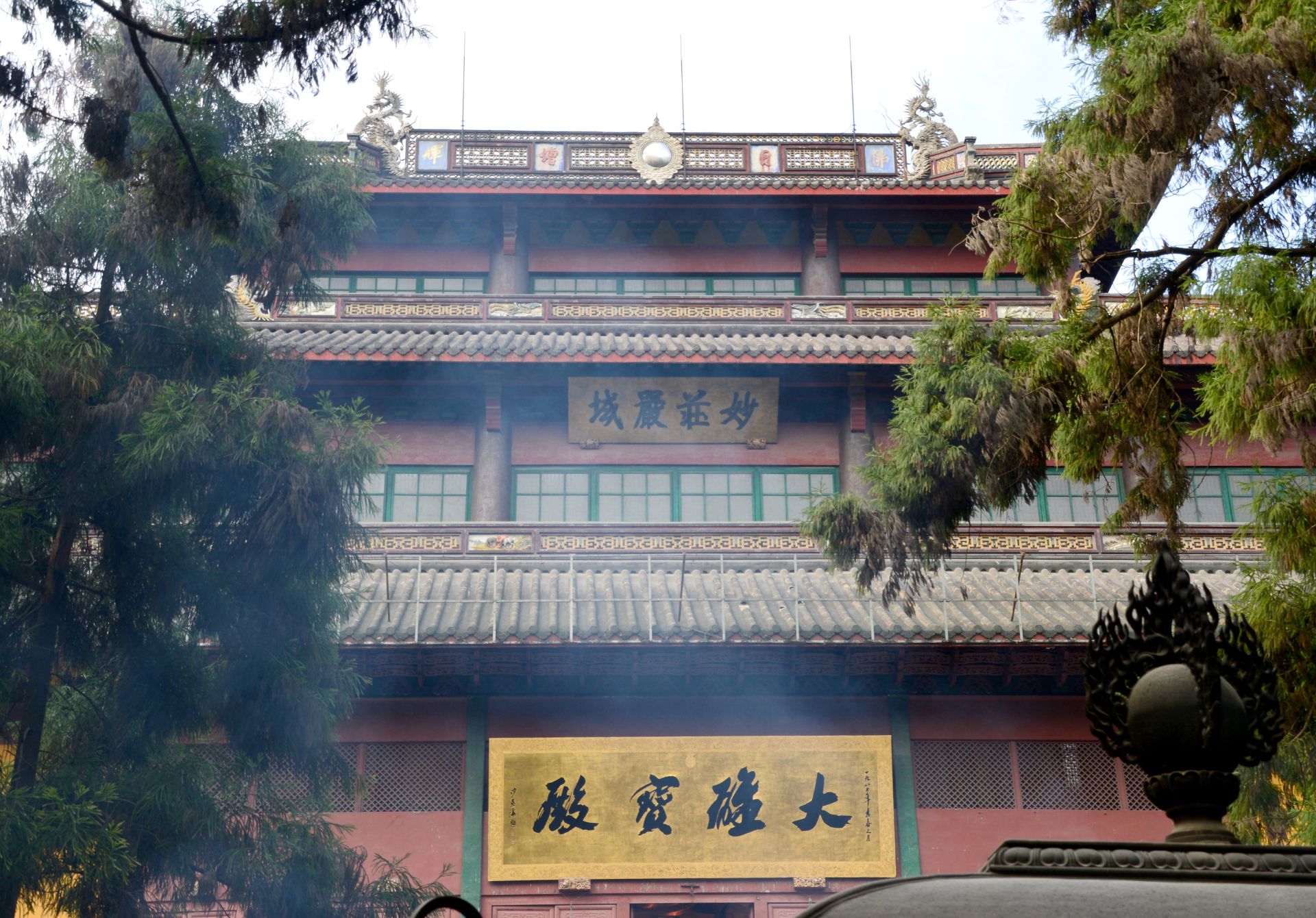
If you’re planning a trip to Hangzhou and thinking it’s all about West Lake selfies and Dragon Well tea, let me stop you right there. Tucked away in a misty valley northwest of the lake lies something far more profound—Lingyin Temple, a place where 1,700 years of spiritual devotion mingles with jaw-dropping architecture and legends that’ll give you goosebumps.
A Temple That Refused to Disappear
Picture this: it’s 326 AD, and an Indian monk named Huili wanders into what’s now Hangzhou. He spots this peculiar limestone peak and declares it must have flown here from India (seriously, that’s the legend). Captivated by the valley’s ethereal beauty, he establishes what would become one of China’s most important Buddhist monasteries—the Temple of the Soul’s Retreat.
What makes Lingyin truly remarkable isn’t just its age, but its resilience. During its golden age under the Wuyue Kingdom around 907-978 AD, this wasn’t just a temple—it was a spiritual metropolis. We’re talking about 9 buildings, 18 pavilions, 77 palaces and halls, and over 1,300 rooms housing approximately 3,000 monks. Imagine the morning chants echoing through those corridors!
The temple survived wars, religious persecution, and even the Cultural Revolution—thanks largely to Premier Zhou Enlai’s protection and brave locals who literally stood in front of Red Guards to prevent its destruction. The structures you see today are the result of careful 1974 renovations, but they carry the spirit of nearly two millennia.
What You Absolutely Can’t Miss
Here’s where your concierge hat comes on. Your clients need to experience these highlights:
- The Hall of Heavenly Kings: Walk through those side doors (the main entrance is ceremonial these days) and prepare to be humbled. Four colossal guardian statues—each 8 meters tall—stand watch. But the real treasure? A 700-year-old camphor wood statue of Weituo from the Southern Song Dynasty. That’s not just art; it’s history you can practically touch.
- The Mahavira Hall: This is the showstopper. Inside sits a 24.8-meter-high statue of Sakyamuni Buddha carved from 24 pieces of camphor wood. The hall itself stretches 33.5 meters high—taller than many temple’s entire main buildings. Emperor Kangxi loved this place so much he personally inscribed a plaque calling it “Cloud Forest Buddhist Temple.”
- Feilai Feng (Flying Peak): Before you even reach the temple proper, you’ll encounter this limestone marvel covered in over 380 Buddhist statues and rock carvings dating from the Five Dynasties to the Yuan Dynasty. It’s Zhejiang Province’s largest statue collection, and the oldest pieces date back to 951 AD. Art history buffs will lose their minds here.
- The Five Hundred Arhats Hall: Want something different? This hall houses 500 individual arhat statues, each with unique expressions and poses. No two are alike—it’s like a medieval Buddhist portrait gallery.
- Jigong Hall: Here’s a fun one for your clients. Jigong was a legendary monk known for his wit and unconventional ways—think the Robin Hood of Chinese Buddhism. The hall features a bronze statue and a 50-meter mural depicting his adventures. Even a Chinese TV series was filmed here!
Practical Tips Your Clients Will Thank You For
Entry & Timing: There’s a two-ticket system that trips up newcomers. You’ll need to buy a ticket for Feilai Peak Scenic Area (¥45) just to access the grounds, then another for the temple itself (¥30). Total investment: ¥75 per person. The temple opens at 7:00 AM and closes at 6:15 PM, with ticket sales ending at 5:30 PM.
- Beat the crowds: Arrive before 9 AM, especially during Chinese holidays when the place becomes absolutely mobbed. The early morning mist rolling through the valley creates an almost otherworldly atmosphere anyway.
- Best seasons: Spring (March-May) transforms the grounds into a botanical wonderland with cherry blossoms and magnolias. Autumn offers perfect weather and fewer tourists. Both seasons let you appreciate why this valley captivated that Indian monk 1,700 years ago.
- Getting there: From West Lake, take bus Y1, Y2, K7, or K807 to Lingyin Station (about 40 minutes). Taxis run 20-30 minutes and cost around ¥40-50. For clients who enjoy cycling, there’s a scenic 4-5 km route through forested paths—absolutely gorgeous.
- Consider a guide: Audio guides are available in multiple languages at the entrance, but honestly? Spring for a knowledgeable local guide. The Buddhist symbolism, architectural details, and cultural context aren’t always obvious, and a good guide transforms the visit from “nice temple” to “unforgettable spiritual experience.”
- Dress respectfully: This is an active place of worship with real monks and devotees. Keep voices down in prayer halls, dress modestly, and be mindful when taking photos.
Hidden Gems Nearby
Don’t let your clients rush back to West Lake immediately. The area around Lingyin rewards exploration:
- Yongfu Temple: A 15-minute uphill walk leads to this smaller, quieter sister temple with stunning valley views and far fewer tourists. It’s the contemplative antidote to Lingyin’s crowds.
- Nine Creeks and Eighteen Gullies: Starting just behind Lingyin, this moderate 4-5 hour hiking trail winds through bamboo forests, past babbling streams, and through tea plantations. It’s the natural beauty that inspired centuries of Chinese poets—and now it can inspire your clients’ Instagram feeds.
- Lingyin Vegetarian Restaurant: After all that walking, treat your clients to authentic Buddhist vegetarian cuisine. The dishes follow Chinese culinary traditions, and eating in this setting feels appropriately spiritual. Many consider it “food for the gods”—and they’re not wrong.
Why This Matters for Your Clients
Look, Hangzhou has plenty of pretty spots and historical sites. But Lingyin Temple offers something different—it’s not frozen in time like a museum piece. Monks still chant their morning prayers. Incense smoke still curls toward those ancient wooden ceilings. Temple bells still echo through the valley. This is living, breathing Chinese Buddhist culture, not a reconstruction or theme park version.
Recent pilgrim statistics show over 2 million people visit during the Lunar New Year’s first incense ceremony alone. The temple is recognized as a UNESCO World Heritage site component and designated a National Key Buddhist Temple. Even former paramount leader Deng Xiaoping was a regular pilgrim here. This isn’t just tourist infrastructure—it’s one of China’s wealthiest and most influential monasteries.
Your clients seeking cultural authenticity, architectural magnificence, or simply a moment of tranquility away from urban chaos will find all three here. The ancient camphor trees, the mist-shrouded peaks, the stone carvings that have witnessed seventeen centuries of human devotion—Lingyin offers the kind of travel memory that lingers long after the photos fade.
The Bottom Line
Lingyin Temple deserves more than a checkbox on a Hangzhou itinerary. Budget at least 3-4 hours for a thorough visit, longer if your clients want to hike the surrounding trails. It’s easily combined with West Lake or tea plantation visits, but don’t rush it. This is a place to slow down, breathe deeply, and let the weight of centuries wash over you.
Whether your clients approach it as cultural education, architectural appreciation, active worship, or simple peaceful escape, Lingyin Temple delivers. In a world of increasingly homogenized tourist experiences, here’s a place that remains genuinely, profoundly, magnificently itself—just as it has been for 1,700 years.
And trust me, when your clients come back raving about their visit, you’ll know you’ve pointed them toward something truly special.